
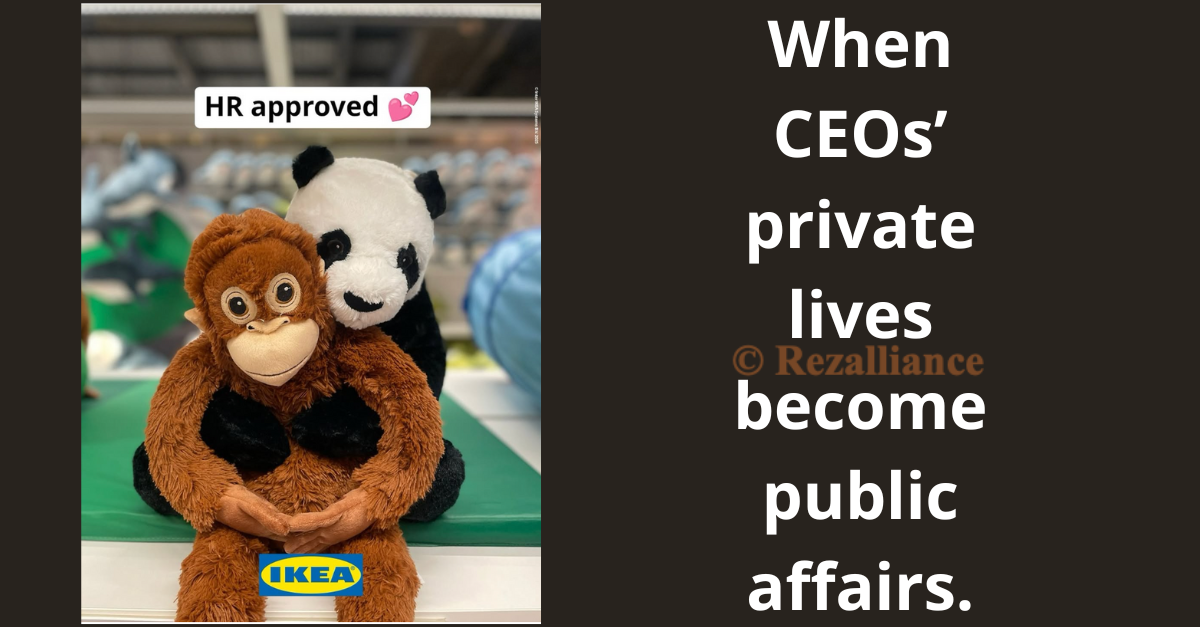
Like everyone else, I followed the Astronomer CEO story this summer. Even on vacation, it was impossible to miss!
I hadn’t planned to write about it… until the recent dismissal of Nestlé’s CEO over a consensual relationship with a subordinate. The various reactions on either side of the Atlantic were striking, which made me reflect more deeply on both cases.
I first ran a small test on my LinkedIn account by posting a brief note on the Nestlé case. The comments—mostly from men—were intense, sometimes aggressive. Some of them accusing me of passing moral judgment when my point was solely about compliance and organizational procedures. These exchanges highlighted how deeply this topic resonates: while I stuck to the facts, many responded emotionally, even framing the situation as a form of injustice.
These debates reveal how blurred the line between private conduct and professional accountability can be—a topic directly linked to how organizations handle power, trust, and compliance.
Here is the english version of my column for Le Temps.
The recent dismissals of CEOs in the United States and Switzerland, both linked to romantic relationships with subordinates, have sparked heated debates online. These cases highlight cultural differences and internal organizational challenges. They also raise questions about privacy, leadership accountability, and the impact of publicly airing private matters.
Across the Atlantic: Striking cultural differences
In July, the CEO of Astronomer, a U.S.-based company, was filmed openly embracing his lover—the company’s Chief Human Resources Officer. The footage quickly went viral, sparking a storm of online commentary. In the U.S., most commentators welcomed their dismissal, viewing their conduct as inappropriate and unacceptable. In Europe, however, reactions were far more divided, with many emphasizing the right to privacy and the freedom to love whom one chooses. This contrast highlights how perceptions of leaders’ private behavior vary significantly across cultural and social contexts.
Then in September, Nestlé announced the immediate dismissal of its CEO in Switzerland. The reason: an undisclosed romantic relationship with a subordinate as the official reason. Once again, many voices spoke out in defense of privacy. A stance even more understandable in a country where discretion is a deeply ingrained cultural value. Nestlé’s decision to publicly disclose the grounds for dismissal was striking, running counter to Swiss norms of restraint.
Beyond the unusual publicity, the severity of the sanction itself raises questions. Can a consensual relationship, left undeclared in violation of company policy, truly justify termination? Many would argue that a warning or formal reprimand would have been more proportionate. Jumping straight to dismissal risks appearing excessive, particularly given that the conduct in question does not amount to harassment. While the company may have sought to underscore its commitment to rules and leadership accountability, the decision risks backfiring—especially when, in so many harassment cases, it is the victims who end up leaving organizations, not the perpetrators.
Ethics in action: Integrity, congruence, and credibility
Declaring the ambition to foster an inclusive culture is commendable, but it must be implemented with balance and fairness if it is to gain genuine buy-in. If Nestlé’s intention was to set an example and strengthen its reputation as a governance leader, the publicity surrounding this private matter—and the perceived harshness of the sanction—has had the opposite effect. This case illustrates how poorly calibrated enforcement of inclusion and harassment-prevention policies can undermine, rather than advance, their intended goals.
Reactions have been highly emotional, with many interpreting Nestlé’s decision as a moral judgment. One thing is clear: the issue is highly sensitive, and precisely for that reason it deserves open discussion. Beyond the question of privacy, it raises fundamental issues of ethics, integrity, and congruence: the alignment of values, words, actions, and decisions.
For those interested in similar cases, I wrote about McDonald’s CEO dismissal for the same reason five years ago. The article was titled: “Don’t get your honey where you get your money.”
For those interested in similar cases, I wrote about McDonald’s CEO dismissal for the same reason five years ago on this platform. The article was titled: “Don’t get your honey where you get your money.”
To conclude, a French study shows that 2 out of 10 couples meet at work. This underscores how complex the topic is: romantic relationships in the workplace aren’t new, nor are they inherently unethical.
Thanks for reading my perspective. How about yours ?
Joëlle Payom is an independent consultant, trainer, speaker, and Ombuds – Personne de Confiance. President of Rezalliance & Founder of Rez-care.com platform, she helps organizations across Europe build inclusive, safe and respectful workplaces.cross Europe.
Her approach combines law, psychology, coaching, and organizational strategy. She helps individuals and organizations resolve conflicts, prevent misconduct, and build inclusive cultures. Recognized for her balanced approach and systemic analysis, she guides organizations in identifying risks and implementing sustainable solutions. She is the Initiator of the International Anti-Harassment day